NHS Property Services, England, UK - Climate-Resilient Healthcare Estates
Together with Urban Intelligence, Adaptlantis supported NHS Property Services (NHSPS) in building a climate risk picture for its healthcare estate across England. NHSPS manages one of the largest and most heterogeneous portfolios of clinical and non-clinical healthcare buildings in the country, and heat, flooding, wildfire and extreme wind increasingly threaten both the buildings themselves and the essential infrastructure they depend on.
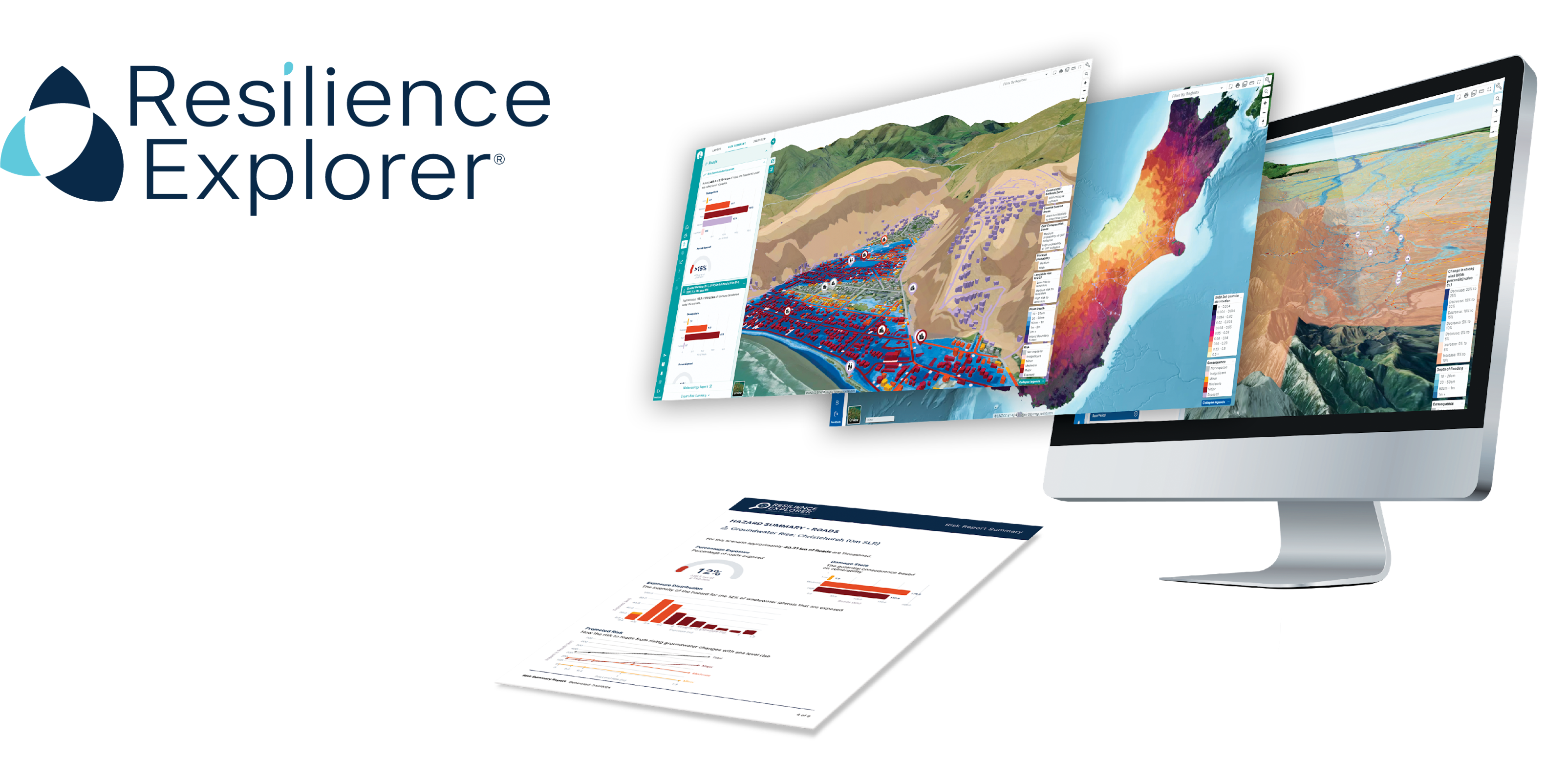
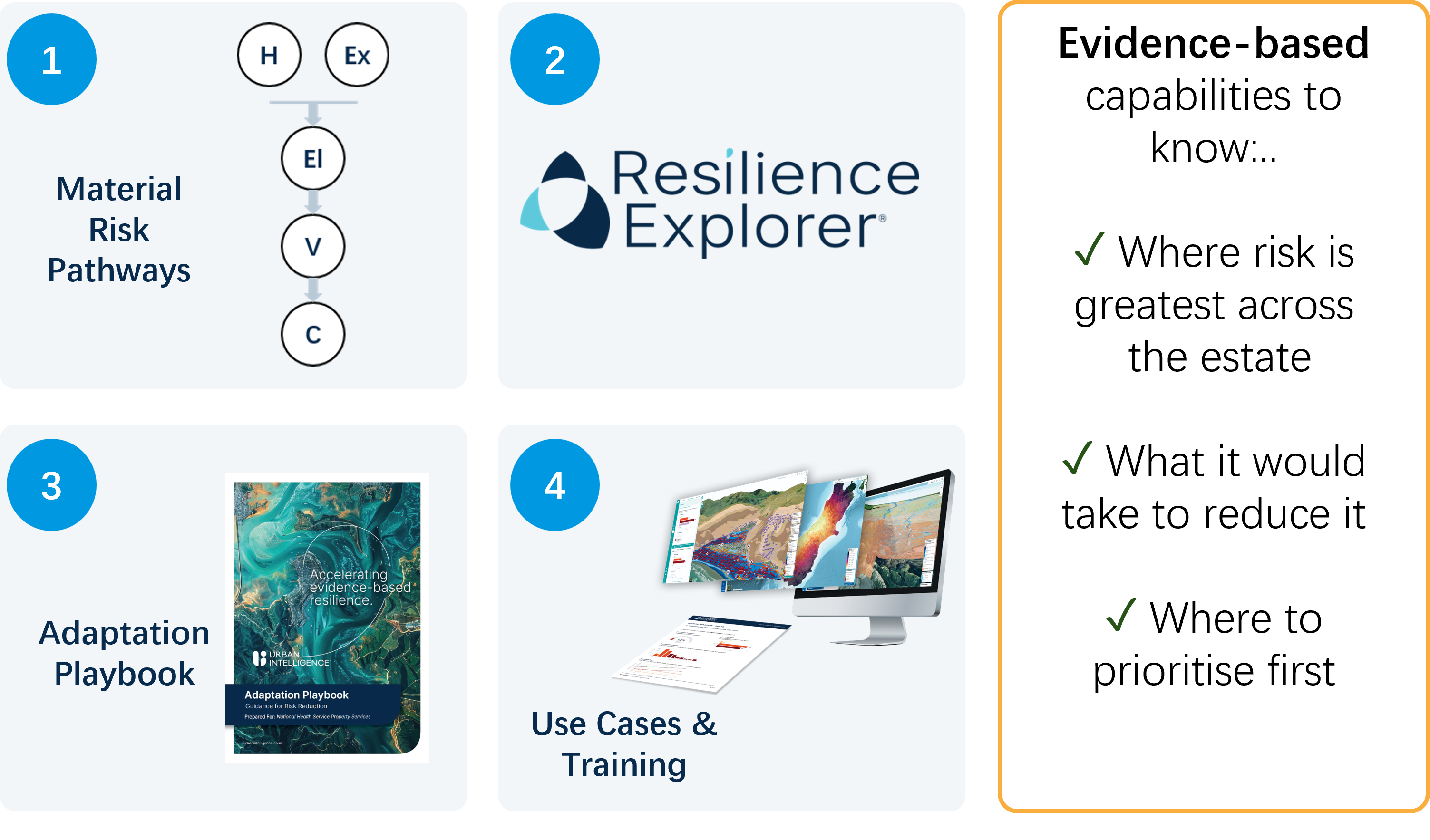
The project centred on the Resilience Explorer®, a georeferenced platform that combines nationally consistent hazard data — coastal, pluvial and fluvial flooding, wildfire, extreme wind and heat stress — with building and property data across the NHSPS estate and vulnerability functions linking assets to hazard interactions. A ‘Material Risk Pathways’ framework qualitatively distinguishes direct risk, the immediate exposure of assets to a hazard, from cascading risk, the secondary consequences that travel across interdependent systems such as electricity substations and transport networks. Both are assessed against a set of essential values of the NHSPS for example the physical estate, service continuity, human essentials, financial values, and institutional trust.
An accompanying Adaptation Playbook translates this risk picture into a digital catalogue of adaptation measures, organised by disaster risk management stage and scored on co-benefits, cost, benefit-cost ratio and time horizon. Because a single risk dataset serves very different decisions, the platform was built around specific use cases within NHSPS for example a Finance Team assessing capital investment across the portfolio, a Major Incident Management Team coordinating live response, and a Site Digital Infrastructure Manager safeguarding power and network services on the asset level.
The approach demonstrates how cascading effects — for example, flood-exposed substations knocking out power at dependent sites, or heat stress pushing operating theatres above the 26°C clinical threshold — can affect a healthcare estate's functionality far beyond direct building damage. It is a template we believe is directly transferable for example to the German emergency care landscape, where a 2026 DGINA survey found that most emergency departments still lack full air conditioning or heat provisions in their emergency plans.
This work was delivered in partnership with Urban Intelligence, developers of the Resilience Explorer® platform.